
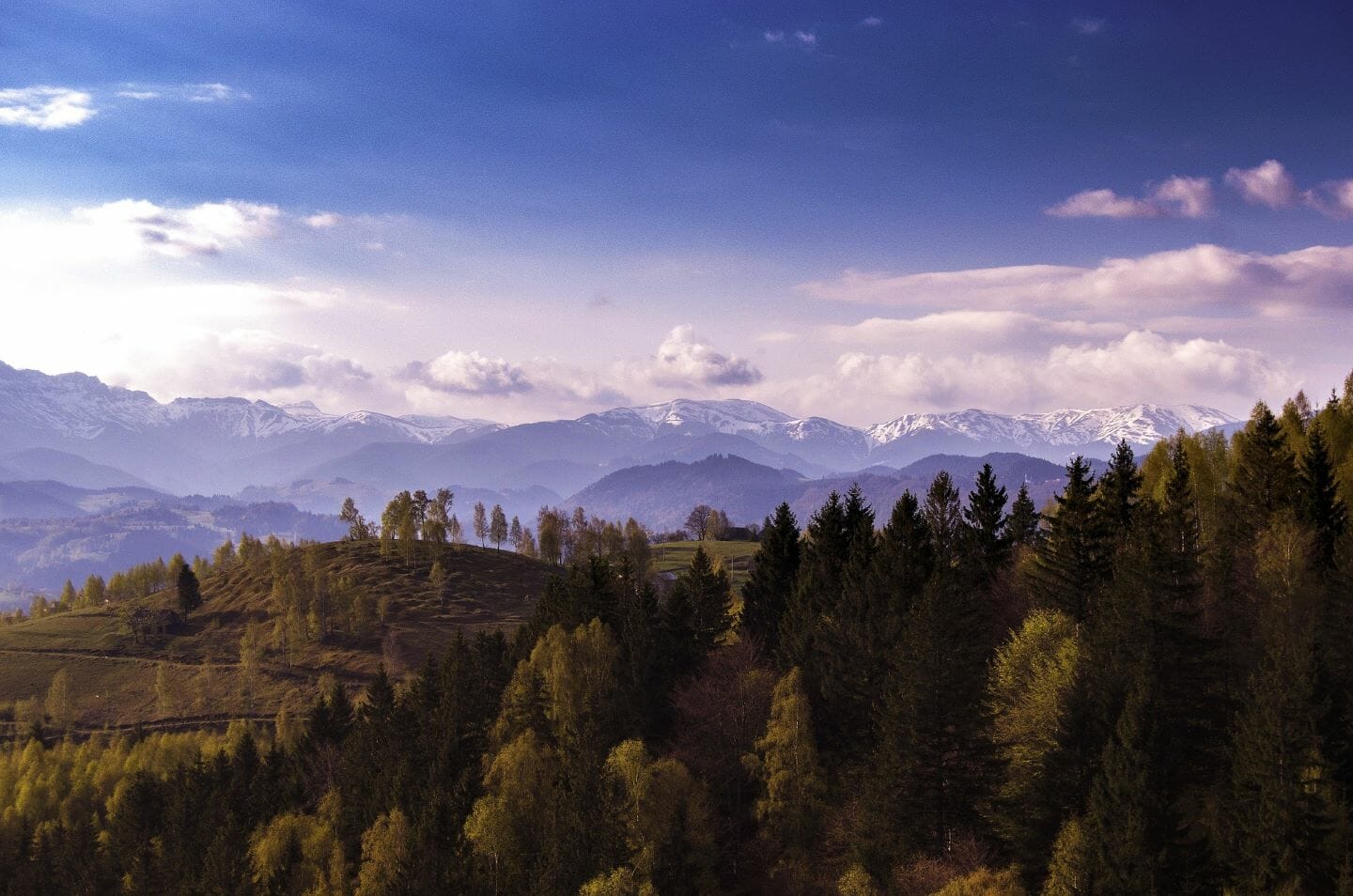

The Carpathian Mountains
With summits in the High Tatras and the Fagaras Mountains, the Carpathians are, with the Alps, the dominant mountain range in Central Europe. The highest peaks reach about 2,700 metres. A majority of the mountains are in Poland, Slovakia, Ukraine and Romania.
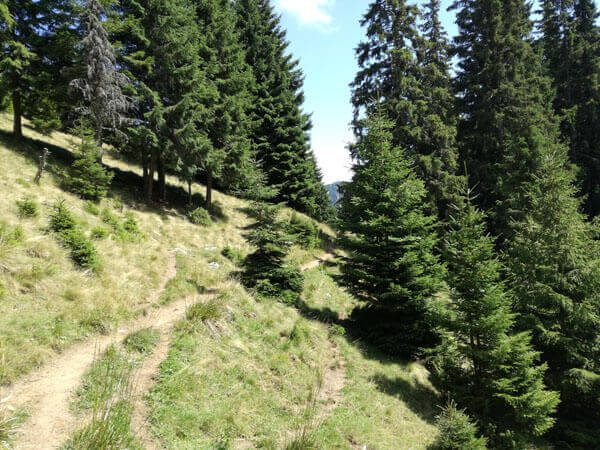
The tips in this blog refer to the Romanian mountains, which doesn’t mean that other sections aren’t worth a visit.
In addition to the imposing slate walls that characterise these mountains in Romania, it is particularly the diverse fauna that stands out. The largest brown bear population in Europe calls the Carpathian Mountains its home, and you might even see wolves or lynx if you’re lucky. The varied nature is therefore another aspect that makes hiking in the Carpathians worthwhile (in particular in comparison with the Alps where it gets increasingly difficult to really experience nature as it is).
People and culture
Romania is an incredibly hospitable country. The people are very open and helpful. You won’t have any difficulties communicating in English. Despite the German influence that is still noticeable in some parts of Transylvania, German is hardly spoken anywhere now. Those who can speak Italian or French also have an advantage because Romanian is one of the Romanic languages meaning there will be many similarities.
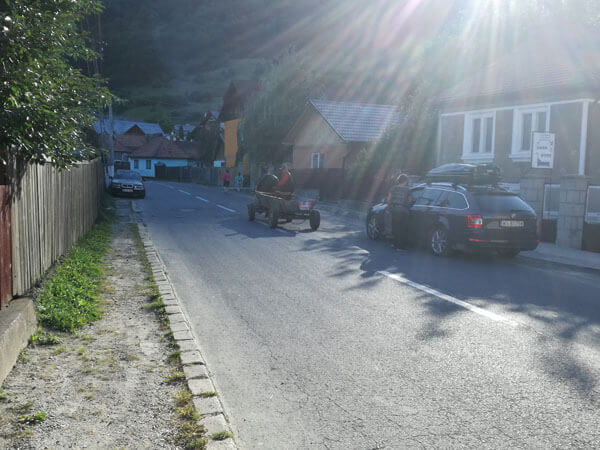
Romania has been heavily influenced by its experiences at the times of the Stalinist dictator Nicolae Ceaucescu. During his reign lasting more than 30 years, he ruled the country with a boundless terror regime, even by the standards of Communist Eastern Europe. For many people, this was a shaping experience that still resonates today and regularly comes up in conversation.
If you decide to go hiking in Carpathia Country, you will probably spend most of your time in Transylvania. Sibiu or Fagaras are great starting points for nice trips; Brasov, however, is even better.
Tips for hiking in Carpathia Romania
Zarnesti-Cabana Curmatura-Vf Ascutit-Zarnesti multi-day trip
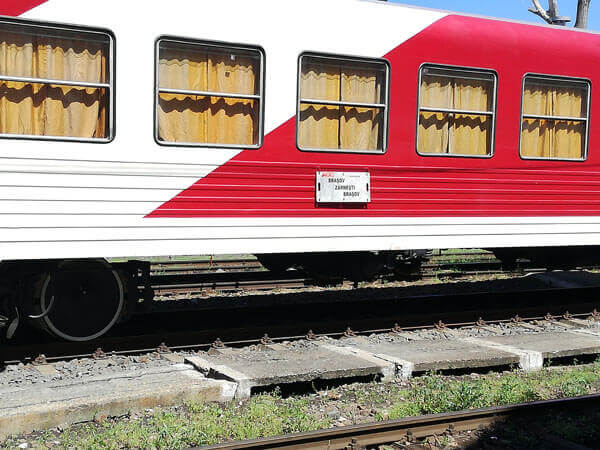
From Brasov, we take a regional train to the little town of Zarnesti which is a good starting point for both single-day and multi-day trips.
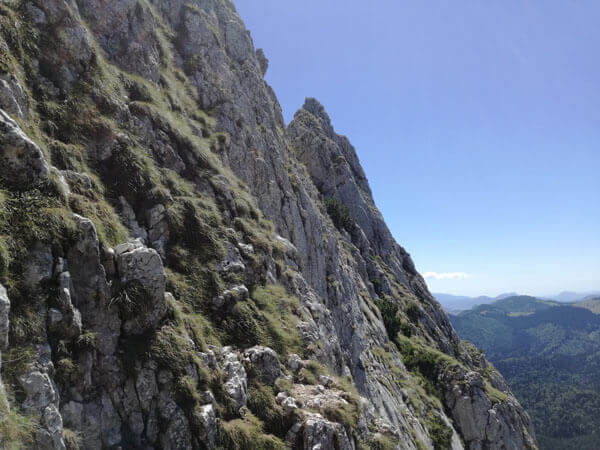
On the first day, we’re following the gravel track towards Magura, which you’ll see when leaving the town. From here, we’re ascending towards Cabana Curmatura. This is quite a popular one-day trip so this section may be busier. Having arrived at Poiana Zanoaga mountain pasture, we take the turn up towards Piatra Mica where we can enjoy a great view of the valley. We’re attempting the first secured climbing passage, before descending again to “Curmatura”, a managed hut. You can refuel here for little money, and set up a tent.
On the next day, we’re off on the long and steep ascent to Cf. Ascutit, then along the main ridge of Piatra Craiului, crossing La Om at about 2,200 metres, to Refugiul Funduri refuge hut. Make sure you allow between eight and nine hours of walking time and take plenty of water because it gets very hot especially in the summer. There’s enough space for tents around the refuge hut.
On the third day, we’re descending again via another refuge hut, Refugiul Grind II, towards Zarnesti. On our journey, we’re crossing the impressive Cheile Pisicii Gorge that will really make climbers’ hearts beat faster with its steep rock faces.
Day trip: Bran Castle – Magura – Zarnesti
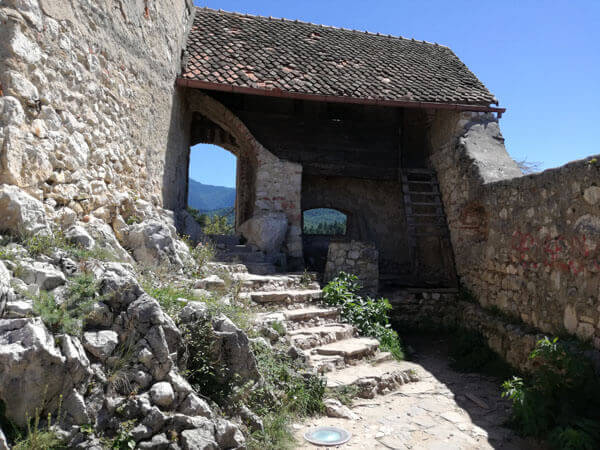
One of the highlights for tourists – and therefore incredibly busy unfortunately – is the legendary “Dracula” castle in Bran. Starting from Brasov or Zarnesti, you can easily reach it by bus.
From Bran, you can go on a beautiful one-day trip to Zarnesti via Magura mountain village. Simply follow the red and white markings on leaving the town. Once you’ve managed the strenuous ascent, you will keep getting rewarded by amazing views of the castle and its picturesque surroundings. The whole hike to Zarnesti takes about 5 to 6 hours but there are regular lovely spots where you can take extended breaks.
Two-day trip: crossing the Bucegi mountain range Bran-Sinaia
Also from Bran, we ascend to Cabana Omul. The trail is initially characterised by a slightly ascending forest track, which then turns steeply to the right after a few kilometres (it’s best to follow the red crosses). When we reach the beautiful Cascada Moara Dracului waterfall, the toughest section of our seven-hour journey begins. Long climbing passages secured by ropes lead to the high plateau where the managed Omul hut is located. This is where we’re spending the night. Camping is not permitted in Bucegi National Park because of the number of bears in the area.
On the next day, we’re descending towards Sinaia cable car station. You can either take the cable car into the valley or continue walking for the rest of the way. The former takes about three and a half hours. You will need six to seven hours to hike the entire way.
Equipment for hiking in the Carpathian Mountains
What equipment you’ll need for your Carpathian adventure depends on the time of year. “Regular” hiking gear is absolutely sufficient from early spring until the beginning of autumn. That includes sturdy footwear (you can get that from the approach area) because the Romanian mountains are often steep with a lot of gravel. I’d therefore recommend sensible walking poles which will be of great help on the descents in particular.
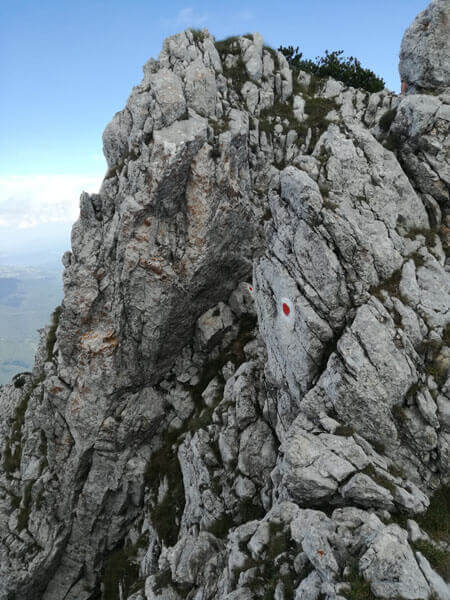
Depending on the length of the trip, I would take a backpack with a volume of 30-40 litres in which you can carry your waterproofs. During transitional seasons, you may also wish to take a fleece or merino layer.
The topic of water purification is a little controversial. There are sections where drinking water is in short supply. This includes the main mountain ridge in the Piatra Craiului National Park that doesn’t feature a natural water source. There’s a chance you’ll have to make do with livestock watering troughs if your reserves aren’t enough. That’s why taking a water filter or a chemical purification agent can be useful. That’s a decision the individual has to make but a small water filter like the Source filter weighs hardly anything – at least you have an option then.
You can buy maps for little money in the visitors’ centres in the relevant national parks. But most paths are very well signposted so finding them won’t pose a problem.
You don’t need much else to have a great hiking adventure in the Carpathian Mountains in Romania.
Getting there
And what’s the best way to get there? Of course, you can go to Romania by car but you have to remember that, depending on the region, it might be quite a distance that cannot be managed in one go. I would therefore recommend the train or plane. Both options are easy from many starting points in Germany. Deutsche Bahn, for example, goes from most German railway stations to Brasov via Vienna every day. As I mentioned above, Brasov is a great starting point for many trips.
Lufthansa flies directly to Sibiu from Munich. But only from Munich unfortunately – you’d have to change flights from other German airports. Alternatively, there are flights to Bucharest from all major German airports. It’s worth a quick diversion as well.
In Romania itself, it’s surprisingly easy to use public transport. Trains and buses are cheap and mainly reliable. Using buses or trains, you can easily reach key starting points for beautiful trips.
If you need more information, please ask questions below in the comment section. I hope I managed to inspire you to go hiking in the Carpathian Mountains. Enjoy!


1 Comment on the Article
Dear Marco, information on hiking in Romania is hard to find or, at least, it's hard to work out the best route for a multi-day hike - say, around seven days - so I'm wondering if you'd care to give some advice. I walked the haute route (self guided last year) and would like to think I'm good on my legs. All advice much appreciated. Best wishes, Nick