
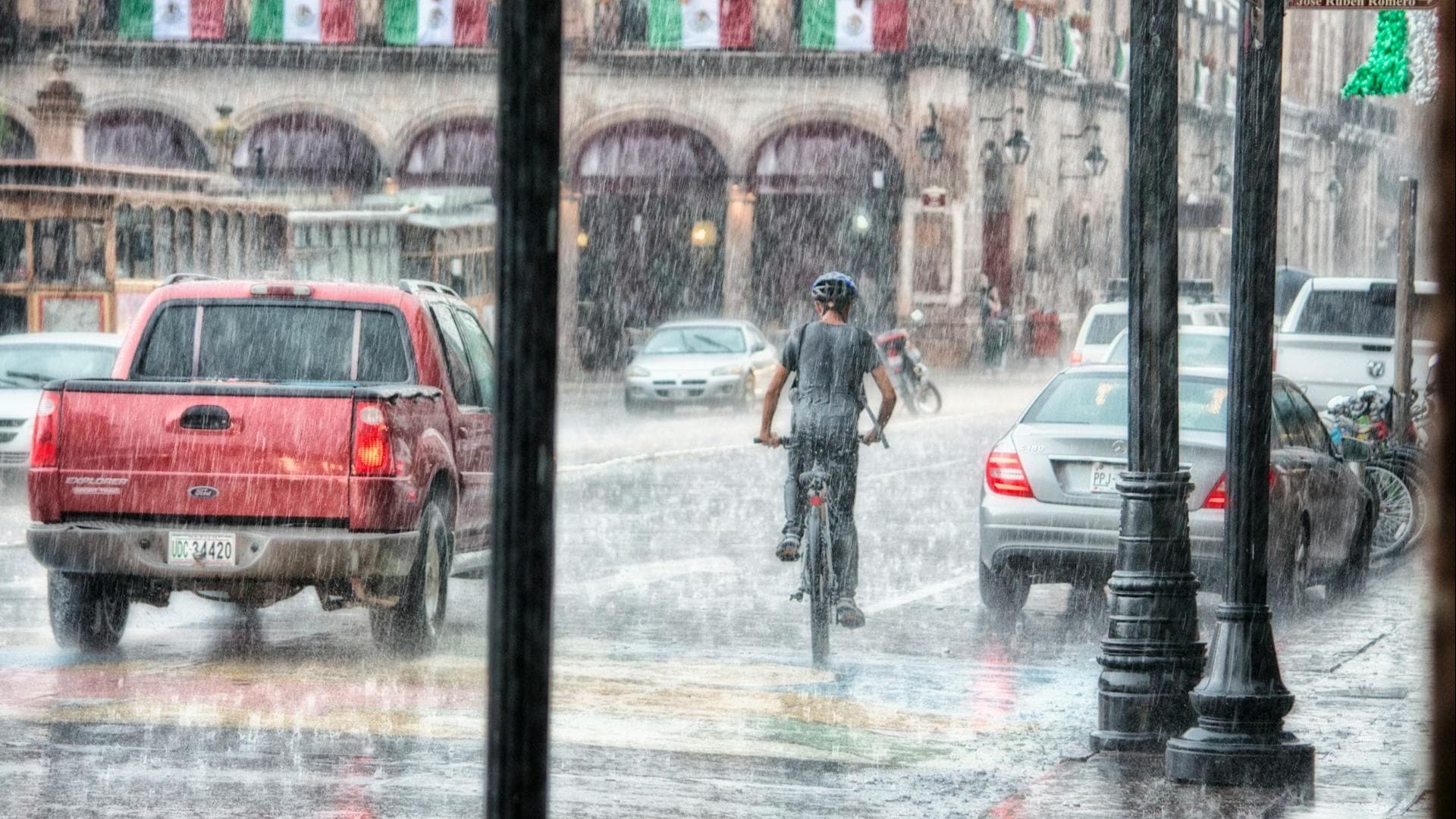

If you’re hardier than I am, or simply don’t have a choice – perhaps you’re a commuter or rely on your bike to get around – then it’s worth knowing what to expect in wet conditions, how to stay safe, and what gear you’ll need for both yourself and your bike. That’s why we’ve put together these essential tips for cycling in the rain.
Is It Safe to Cycle in the Rain?
Let’s start with the obvious: rain makes everything wet, including the road beneath your tyres. That means extra caution is needed, especially on cobblestones, fallen leaves and manhole covers, which can become dangerously slippery. Slow down and ride with care.
Corners are particularly risky when the surface is slick. Depending on the road and your tyres, adjust your speed to avoid skidding.

Puddles are more than just splash hazards. They can conceal deep potholes, so it’s best to steer around them. Even shallow puddles can be problematic, especially at speed or with narrow tyres. Yes, aquaplaning can happen on a bike too.
And don’t forget visibility. Rain – especially heavy rain – can make it harder for you to see and be seen. Make sure you’re clearly visible to others and adjust your speed accordingly.
Essential Gear for Rainy Rides
There’s no such thing as bad weather, only bad clothing. There, I’ve said it. But seriously, with the right kit and a few tweaks to your bike setup, even a downpour doesn’t have to ruin your ride.
Waterproof Clothing That Works
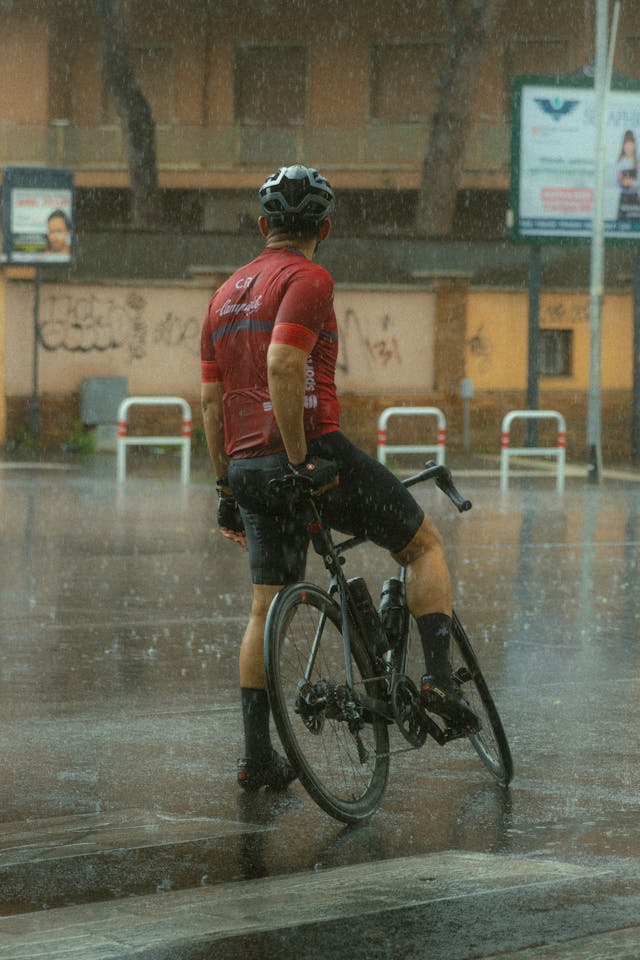
It goes without saying that waterproof gear is a must. Look for jackets and trousers with a high hydrostatic head rating – we recommend at least 20,000 mm. In heavy rain, wind pressure can force water through lower-rated fabrics.
Opt for a rain jacket with a longer cut at the back to protect against spray, and pair it with cycling-specific waterproof trousers. These are often reinforced in the seat and crotch to withstand the wear and tear of pedalling.
Keep your hands and feet dry with waterproof gloves and overshoes. Choose gloves with extended cuffs that seal neatly with your jacket sleeves, and ensure your overshoes fit snugly over your trousers to prevent water ingress.
Your helmet is a given, but keeping your head dry requires one of two options: a cycling jacket with a hood designed to fit over your helmet, or a dedicated helmet rain cover. The latter is compact, easy to store and quick to put on when the skies open.
Mudguards and More: What Your Bike Needs in the Rain
One of the biggest challenges when cycling in the rain is the spray from below. Without proper protection, it quickly becomes an uncomfortable experience. Thankfully, someone once had the brilliant idea to invent mudguards. These are often standard on trekking and commuter bikes but can also be retrofitted with relative ease. Many models are quick to attach and remove, so you can use them only when needed.
As mentioned earlier, visibility is reduced in wet weather. It’s essential to equip your bike with waterproof lights to ensure you’re seen. Reflective elements and bright clothing also play a key role in keeping you safe. If your rain gear isn’t reflective, you can add visibility with patches, armbands or safety vests. Reflective stickers on your bike are another smart addition, especially if you often ride in the rain, during the shoulder seasons or in winter darkness.
Your choice of tyres – and more importantly, your tyre pressure – can significantly affect how your bike handles in the wet. Rain-specific or all-weather tyres offer better grip, and slightly reducing your tyre pressure helps improve traction. We recommend lowering the pressure by around 20 percent in wet conditions.

More Tips for Cycling in the Rain
The most effective way to stay safe in the rain is to adjust your speed. Slow down, especially before corners, so you can ride through them without braking. Braking mid-turn on a wet surface can easily cause your bike to slide out from beneath you.
When riding on the road, anticipation is everything. Watch out for slippery hazards like cobblestones, manhole covers and wet leaves – not to mention other road users. And remember, your braking distance will be longer on wet terrain.
After your ride, give your bike a thorough clean. Moisture mixed with road grime is a recipe for rust. Pay special attention to your chain, which should be cleaned and oiled more frequently in wet weather. If you ride in the rain regularly, it may be worth investing in a chain oil designed specifically for wet conditions.
Final Thoughts
After all that, even as a self-confessed fair-weather cyclist, I’m finding it harder to justify skipping a ride just because the weather looks a bit grim. Though I must admit, my inner sloth is still putting up a strong fight.
In any case, I hope these tips help make your next rainy ride safer, and a little more comfortable too.
If you have any questions, feel free to leave a comment or call our Gearheads. They’re available on weekdays from 8 am to 4 pm. You can also reach us via our contact form.


