

If you’ve already completed a few road races and are now eyeing a long trail event in the mountains but aren’t sure how to train for it, you’re in the right place. This article outlines what makes ultramarathon preparation unique and how to approach your first ultra.
It’s Not Just About Running
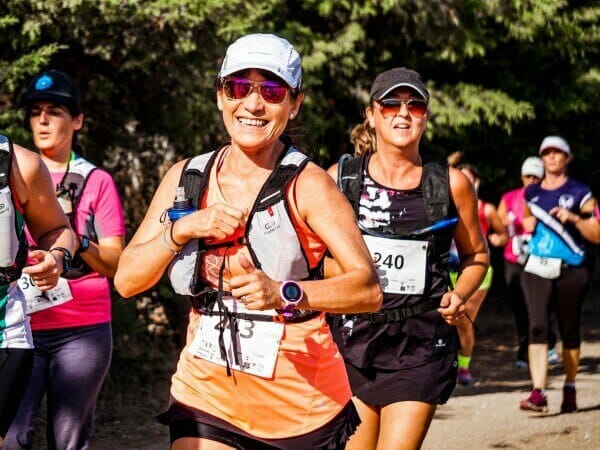
Unless you’re among the elite few at the front of the pack, you won’t be running the entire race. Trying to complete the course as quickly and efficiently as possible is often the downfall of first-time ultrarunners. Many push themselves to run as much as they can, only to end up resorting to the infamous “ultra shuffle” where their feet barely lift off the ground and their stride turns into a slow trudge. A common mistake is neglecting to train for walking and hiking.
For shorter distances up to a marathon – whether on road or trail – the focus is usually on running fast and efficiently. While pacing, mental focus and fuelling are still important, the main goal is to grit your teeth and push through to the finish. As a result, training tends to revolve around pure running.
Long Distances Require a Different Approach
The longer the race, the less it is about being a runner. That might sound counterintuitive, but ultramarathons demand a very different skill set. Strategy becomes key, along with smart nutrition and a well-balanced mix of running and walking to cover the distance as efficiently as possible.
Ultramarathons present three main types of challenges, in this order:
- Mental
- Emotional
- Physical
You might be thinking that can’t be right. Surely the physical challenge is the biggest? After all, it’s still running – and for a very long time. But someone who can hike efficiently over 100 kilometres or even 100 miles of flat terrain at 5 to 6 km/h is already well prepared for the distance. They’re likely to be more relaxed than those trying to run every step, only marginally faster on the flats. And once the trail heads uphill, everyone ends up walking anyway.
How Do You Know You’re Ready for Your First Ultramarathon?

Let’s turn to the mental and emotional side of things. The typical journey to an ultramarathon often follows a familiar pattern: 10k, half marathon, marathon. After that, many runners feel the urge to go beyond the 42-kilometre mark. Since most ultramarathons take place in nature, often in the mountains and on trails, they appeal to those who find city road running too repetitive or are simply looking for a fresh challenge away from familiar terrain.
So if you’re wondering which race or distance to choose for your first ultra, ask yourself one key question: what inspires you?
Maybe there’s a region in the Alps where you’ve hiked before and loved the experience. Some races loop around mountain ranges, cross from one valley to another, or follow trails you already know from your training runs. These personal connections can help you choose a race that truly resonates.
You’ll be out there for a long time during an ultramarathon, so the scenery should be something that lifts your spirits and keeps you moving. Time passes much faster when you’re surrounded by stunning views.
In summary: if you’re motivated enough to sign up, you’re ready. Choose a route that excites you. Thinking about the landscape and the challenge ahead will give your training an emotional boost – and make it easier to stick with it, even when the weather turns.
Training: Preparation Is Everything
Embrace the Downhill
For many first-time ultrarunners, downhill sections are the biggest stumbling block. Running downhill puts serious strain on your thigh muscles, so it’s essential to train for it specifically. It’s not about bombing down the hill to make up time. The goal is to run economically and efficiently so you can keep going on the next descent.
Neglecting downhill training can turn your ultra into a painful slog. We’ve covered the ins and outs of downhill technique in a dedicated article.
If you don’t have trails or mountains nearby, you’ll find useful tips in our guide to downhill training.
Hiking: Conserving Energy on the Climbs
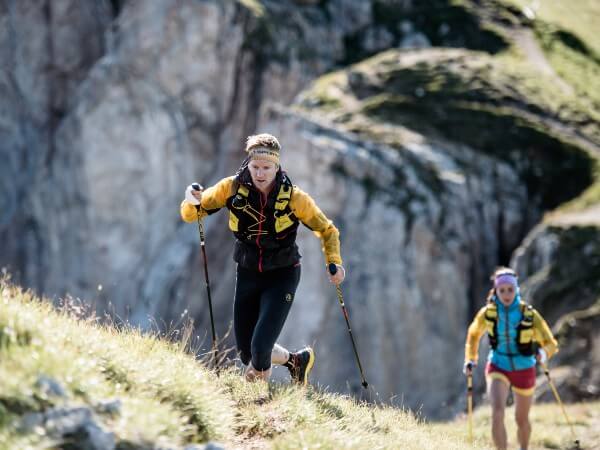
For an ultramarathon, you need to train yourself to walk. That’s non-negotiable. Walking is often more efficient than running on steep or technical terrain. Even the world’s top ultra athletes walk large sections of the course when the gradient demands it. Besides giving your muscles a break, walking offers mental relief through variety. After all, running for 100 kilometres straight isn’t just physically demanding – it’s mentally exhausting too.
Efficient hiking isn’t a gentle stroll to the shops. It requires targeted training. Here are a few practical tips to include in your routine:
- Hiking boosts overall fitness and strengthens key muscle groups
- Practice fast, purposeful hiking even on flat or runnable terrain
- Run the first half of a climb, then hike the second to compare effort levels
- On your usual hilly loop, run everything once and hike all the inclines next time – see how much time you actually lose
- Try short uphill intervals at full intensity, but hike instead of run
Trail running poles can make uphill hiking easier, but technique matters too. You’ll find a detailed overview in our base camp article on trail running poles.
Mental Preparation: The Key to Ultramarathon Success

The nerves are usually at their peak in those final minutes before the start, with the entire field lined up and ready to go. And you should feel excited too – if you didn’t, it would mean you weren’t invested in what you’re about to achieve. Rather than imagining yourself at the finish line with a cold beer in hand, it’s more helpful to break the course down into manageable sections. Just two kilometres to the next aid station, then a cold drink. One more climb, then a stunning view and a chance to recharge on the descent. These mental tricks help long distances pass more quickly and make it easier to push through low points, especially in the second half of the race.
Focus on what you can control. If others are running faster or the rain doesn’t let up, it’s not the end of the world. Don’t let external factors drag you down. Instead, enjoy the scenery, trust your preparation and stay mentally engaged throughout the race.
Strategy for Your First Ultramarathon
Seasoned ultrarunners will often share advice on what to avoid during your first ultra. If you don’t know anyone personally who’s taken on such a challenge, don’t worry – we’ve got you covered.
Here are a few tried-and-tested tips to help make your first ultramarathon a success:
- Start slow: You’ve probably heard this countless times, but it bears repeating. Many runners get swept up in the excitement and start too fast. After all that training, your body feels fresh, the adrenaline is pumping and everyone else seems to be flying. But an ultra isn’t won in the first few kilometres – it’s decided after many hours. Choose a pace you can sustain for the long haul, then dial it back slightly. That’s your ideal starting pace. If you’re unsure, practice pacing during long training runs.
- Take it easy on the descents: As mentioned in our downhill training guide, hammering the first descent can leave your muscles wrecked for the rest of the race. Run efficiently and conserve energy. Trust your training.
- Stick with familiar gear: Race day is not the time to experiment. If your trail vest rubs or your new shoes feel off, you’ll regret it. Test all your gear – clothing, shoes, poles, backpack and nutrition – during training. On race day, you need to rely on your kit completely. A blister from untested shoes halfway through the race can undo months of preparation.
Smart Tactics at Aid Stations
Ultramarathons typically feature aid stations where you can refuel and restock. These can be a huge help, but they also come with pitfalls.
Tired runners often collapse into chairs and benches, and once you’re sitting comfortably, it can be hard to get going again. The wide selection of food and drink can also be overwhelming, making it easy to lose focus.
Before reaching an aid station, think ahead about what you need and what to avoid. This will help you make quick, clear decisions. If you do need a break, that’s fine – but set a time limit, like five minutes, to rest and reset. A running watch can help you stay on track.
Eating and Drinking During Your Ultramarathon
What you consume during an ultramarathon is, quite literally, a matter of taste. Some runners swear by plain water, while others prefer coffee or cola. The key is to trust your own preferences and avoid blindly following advice about calorie intake and timing. Just like your gear, the golden rule is: test everything in advance. Discovering halfway up a climb that the last aid station’s snack is causing stomach cramps can quickly bring your race to an early end.
General Nutrition Tips:
- Eat and drink small amounts regularly rather than going hours without and then overloading your system
- Use training runs to find out what your body tolerates while on the move
- Drink when you’re thirsty
- In hot conditions, salt and isotonic drinks can be helpful
- Hydration bladder or front-mounted bottles? Test both and see what suits you
- Eating while hiking uphill is smart – your heart rate is lower and digestion is easier
- Check the race organiser’s website to see what’s available at aid stations. Experienced runners often bring tried-and-tested food of their own
We’ve shared more practical advice in our dedicated guide to nutrition for mountain sports.
Ready for Your First Ultramarathon?
With these tips, you’re well on your way to a successful finish in your first ultra-distance race. Don’t be intimidated by the distance. Enjoy the preparation – after all, the journey is part of the reward. And remember: more training kilometres don’t always equal better fitness. If something feels off physically, it’s better to start the race rested and healthy. One extra run a week won’t make or break your performance.


